Thomas Jefferson Sculpture: Documents and Timeline
A documented chronology of the May 2026 damage and completed repair of New York City's Thomas Jefferson sculpture by David d’Angers, now headed to a Public Design Commission hearing.
Objectives
- Document the incident, treatment, and Public Design Commission approval sequence
- Establish the authorization for the move into the new Klingenstein Family Gallery
- Make primary records available to reporters, scholars, and the public
- Support an informed public discussion about the stewardship of this city-owned sculpture
Milestones
What happened to New York City’s Jefferson sculpture?
This page gathers primary documents and separates confirmed facts from unanswered questions concerning the May 2026 damage and completed repair of the quill on New York City’s Thomas Jefferson by Pierre-Jean David d’Angers.
On July 14, before receiving the treatment proposal, the Washington Street Advocacy Group sent a preliminary request to testify at a public hearing on Public Design Commission item 30459, expressly stating that the request was pending receipt and review of the proposal. After receiving the proposal and incident report, the Group formally appealed for a public hearing on July 15 and stated the grounds for its request. WSAG then organized a letter from historians and scholars, sent on July 16, supporting a public hearing.
On July 17, the Commission notified WSAG that item 30459 “is considered withdrawn and will be presented at the next appropriate public hearing.” The revised July 20 agenda now marks the Jefferson item “WITHDRAWN.” The hearing date has not yet been announced.
Last updated July 17, 2026. This is a developing record and will be corrected as additional documents become available.
Public hearing secured; questions remain
The New York Historical stated on July 15 that Jefferson is already on display “with his restored quill” and that its conservation plan “was approved by the Public Design Commission.”
PDC staff had told us on July 14 that the Commission’s Conservation Advisory Group found the technical proposal appropriate. The original July 20 agenda nevertheless listed item 30459 under Consent Items for “Preliminary and Final” approval of the quill repair.
The Commission has now withdrawn that consent item and committed to presenting it at a public hearing. This means the proposal will not receive the scheduled consent vote on July 20 and the public will have an opportunity to hear a formal presentation and give testimony. It does not resolve the underlying questions about the June 12 treatment, the approval sequence, or the additional move into the new gallery. The public record reviewed to date still does not identify the written authorization under which the June 12 treatment proceeded.
Confirmed chronology
May 27, 12:15 p.m.
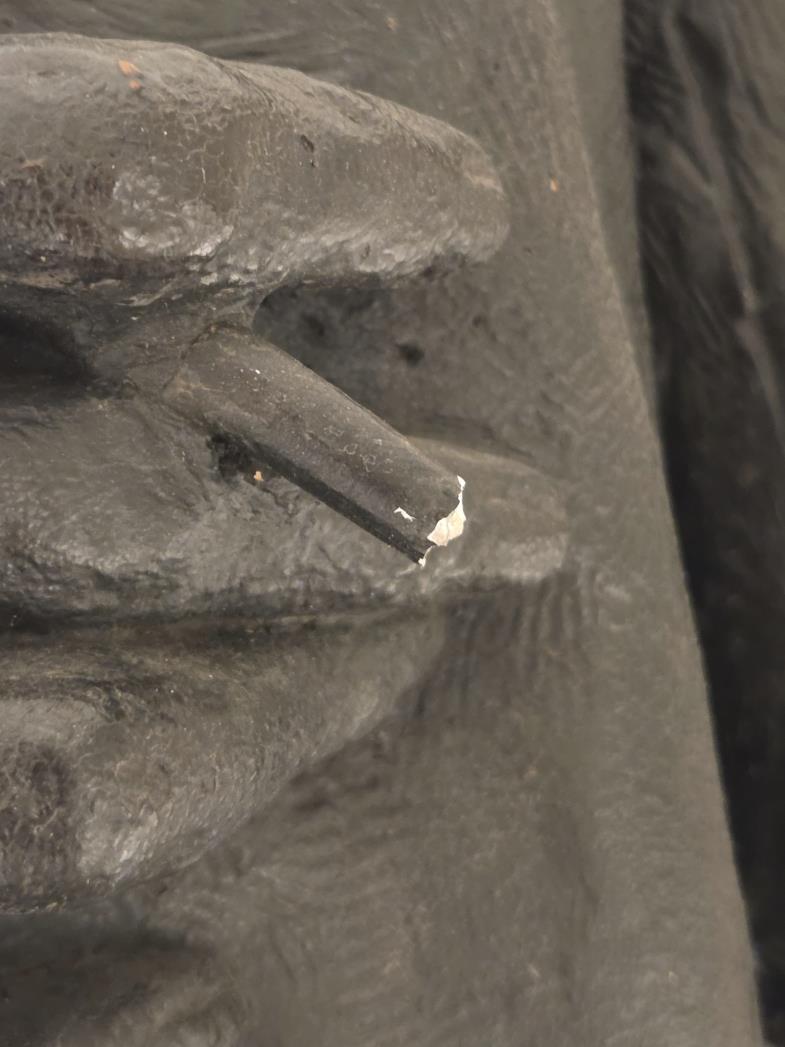
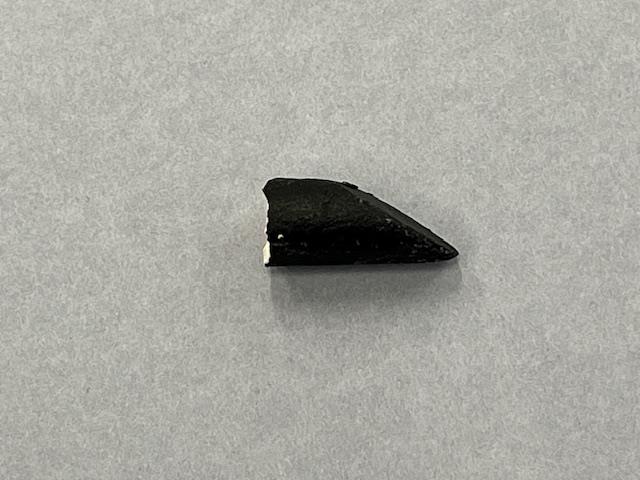
According to the incident report, the sculpture was being prepared to move out of the Klingenstein Reading Room when a support brace slipped and struck the quill, breaking off its last inch. The fragment was immediately bagged and saved.
May 29
Conservator Kenneth Bé signed a minor-treatment proposal recommending reattachment and, if needed, filling and retouching.
June 1
Embedded metadata shows that the incident-report PDF was generated or exported at 5:00:48 p.m. EDT. This timestamp does not establish when the report text was first drafted.
June 12
Repair completed. Marybeth Ihle, Director of Public Relations for The New York Historical, supplied this date in a July 15 follow-up response.
June 18
Democracy Matters opened to the public in the new Klingenstein Family Gallery in the Tang Wing—six days after the repair.
July 14
PDC staff stated that the Conservation Advisory Group found the technical proposal appropriate. WSAG sent a preliminary request to testify, expressly pending receipt and review of the proposal.
July 15
PDC supplied the incident report. After reviewing the records, WSAG formally appealed for a public hearing and requested to testify, citing the separate gallery move and the questions raised by repeated handling of the sculpture. The Historical said the quill had been restored and later identified June 12 as the repair date.
July 16
WSAG sent the Commission a letter signed by historians and scholars asking for a public hearing and a public explanation of the treatment and approval sequence.
July 17
Public hearing granted. PDC notified WSAG that item 30459 “is considered withdrawn and will be presented at the next appropriate public hearing.” Its revised July 20 agenda marks the item “WITHDRAWN.” A hearing date has not yet been announced.
July 20
The Commission meeting will proceed without a consent-agenda vote on item 30459. The item is withdrawn pending presentation at a future public hearing.
What the incident report says
The one-page report identifies the owner or lender as the City of New York and gives the incident location as the Klingenstein Reading Room. It explains that the large plaster sculpture had to be laid on its back to pass through the door. A custom crate included a brace to support the figure’s extended arm. While that brace was being repositioned higher on the shoulder, it slipped and struck the quill, “breaking off the last inch.”
Read the incident report and the May 29 treatment proposal.
Proposed repair technique and materials
Kenneth Bé, Director of Conservation at The New York Historical, signed the May 29 treatment proposal. It says the recovered fragment fit the broken surface perfectly, although the break involved some loss of material. The proposed treatment was:
- Re-adhere the fragment with Lascaux 498-X adhesive.
- Only if necessary, fill any remaining gap with gesso material.
- Retouch the filled area with pigments in a PVA-AYAB resin medium to visually integrate the repair.
The proposal describes filling and retouching as minimal and necessary only if the join required them. The Historical has confirmed that the quill was restored on June 12, but the public documents reviewed to date do not include a completed-treatment report confirming which of these optional steps and materials were actually used.
The Historical’s statement
Marybeth Ihle, Director of Public Relations for The New York Historical, supplied the following statement on July 15 for attribution to a New York Historical spokesperson:
“The Jefferson statue is a fragile work—made of plaster not bronze. In the recent moving of the statue from the research library to our new gallery, the quill was slightly damaged—upon which we informed the city, developed a conservation plan that was approved by the Public Design Commission, and Jefferson, with his restored quill, is now on prominent display in the Democracy Matters exhibition. We are grateful for the city’s loan of this work, and will continue to provide all conservation resources necessary for its care.”
In a follow-up response later on July 15, Ihle answered the repair-date question: “The date was June 12.” The repair therefore occurred six days before the exhibition’s June 18 public opening and 38 days before the July 20 Commission meeting at which the original agenda scheduled preliminary and final approval. The item was subsequently withdrawn from that meeting’s consent agenda.
The phrase “slightly damaged” is the Historical’s characterization. The incident report provides the more specific description that the quill’s last inch broke off. Both descriptions are included here so readers can assess the event from the underlying record.
A nationally important original sculpture
This is not an ordinary decorative plaster object or an interchangeable reproduction. It is a monumental original painted-plaster sculpture completed by David d’Angers in 1833 and one of the country’s most important sculptures in its own right.
The City’s 2021 presentation identifies it as the original plaster from which the related bronze now in the U.S. Capitol was made. That connection is important historical context, but the New York sculpture has its own artistic integrity, civic history, and public significance; it is not subordinate to the Washington bronze.

Read the 2021 PDC loan presentation, the Architect of the Capitol’s history of the related bronze, and its account of the lost-wax process.
The new gallery is a separate location
The November 2021 DCAS presentation submitted to support the Public Design Commission’s authorization of the long-term loan stated on page 5:
“The statue would then be moved to the New-York Historical Society’s Patricia D. Klingenstein Library Reading Room for the remainder of the loan.”
The May 2026 incident occurred while the sculpture was being prepared to leave the Patricia D. Klingenstein Library Reading Room for the Klingenstein Family Gallery, a new and separate exhibition hall in the Tang Wing. This required the sculpture to travel out of the historic Reading Room and into a different part of the expanded museum; the available records do not supply the detailed path of travel or handling route. The shared Klingenstein name should not obscure the location change.
The public record reviewed to date does not identify the approval governing that later move. That does not by itself prove the move was unauthorized; it identifies a record that should be produced or explained.
Questions still awaiting answers
- What written authorization permitted the June 12 treatment?
- Does Conservation Advisory Group concurrence authorize work, or was another approval issued?
- What is the relationship among the advisory review, the completed repair, and the full Commission’s forthcoming preliminary and final review?
- When will the public hearing occur, and what presentation and supporting records will be made public?
- What approval governed the move from the Library Reading Room to the new gallery?
- Where are the pre-treatment photographs, post-treatment photographs, condition report, and completed-treatment report?
- Was an emergency procedure invoked, and if so, what notice and documentation accompanied it?
- Which proposed treatment steps and materials were actually used?
Primary documents and recordings
- Revised July 20, 2026 PDC agenda — item 30459 marked “WITHDRAWN”
- Original July 20, 2026 PDC agenda — archived copy
- May 27 incident report
- May 29 treatment proposal
- November 2021 PDC loan presentation
- October 2021 public hearing video
- PDC public-testimony procedures
- Broken-quill photograph from the treatment proposal
- Detached quill-tip photograph from the treatment proposal
Current exhibition images and video
We are collecting dated views of the sculpture in Democracy Matters. Images showing the quill attached are consistent with the Historical’s statement that the repair occurred on June 12; they do not establish the authorization or approval sequence, the exact treatment performed, or the sculpture’s condition immediately after the repair.
Contact and corrections
Reporters, scholars, conservators, and members of the public may send documents, corrections, or questions to the Washington Street Advocacy Group at tdfine@gmail.com. We will distinguish documented facts, institutional statements, inferences, and advocacy positions as this record develops.
This resource page was developed with research, document-organization, and editorial support from Codex. The Washington Street Advocacy Group reviewed and is responsible for the published content.
Press (43)
Related Updates
Public Design Commission Withdraws Jefferson Repair Item and Will Hold Public Hearing
After WSAG requested testimony and organized a letter from historians and scholars, the Public Design Commission withdrew the Jefferson repair proposal from its consent agenda and committed to a public hearing.
WSAG Opens a Public Record on Damage to the City-Owned Jefferson Sculpture
WSAG is assembling the incident, treatment, and approval records after securing a Public Design Commission hearing on the city-owned Jefferson sculpture.